Grammatical Analysis
The larger passage, Ephesians 1:3-14, makes up one long sentence, unpunctuated in Greek, which flows from thought to thought without much organizational structure, similar to the way we pray—often many thoughts strung together and sometimes redundant. Paul, however, is not being careless in his words and thoughts; his prayer comes from a place of deep theological conviction and spiritual inspiration.
In the first section of this prayer, 1:3-6, Paul focuses on the plan, foreknowledge, and sovereignty of the Father.
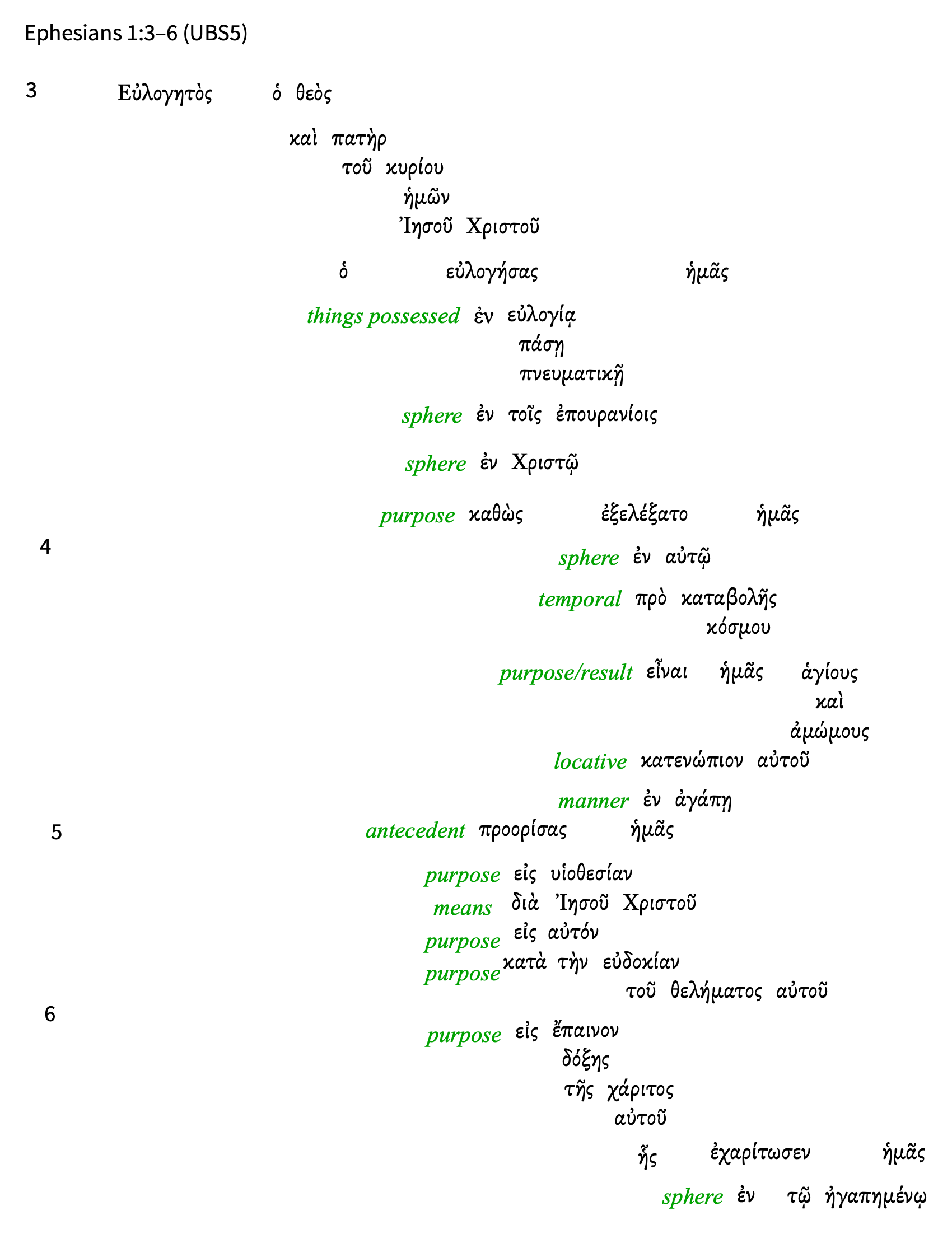
Breakdown:
3 Εὐλογητὸς ὁ θεὸς καὶ πατὴρ τοῦ κυρίου ἡμῶν Ἰησοῦ Χριστοῦ, ὁ εὐλογήσας ἡμᾶς ἐν πάσῃ εὐλογίᾳ πνευματικῇ ἐν τοῖς ἐπουρανίοις ἐν Χριστῷ,
Εὐλογητὸς ὁ θεὸς καὶ πατὴρ τοῦ κυρίου ἡμῶν Ἰησοῦ Χριστοῦ, Εὐλογητὸς Adj NMS ευλογητός, ή, όν “blessed,” ὁ θεὸς NMS “the God” pred. nom., καὶ conj “and” coordinating, πατὴρ NMS “Father,” τοῦ κυρίου GMS “Lord,” ἡμῶν 1PP GP “of us/our,” Ἰησοῦ Χριστοῦ GMS “of Jesus Christ”
ὁ εὐλογήσας ἡμᾶς ὁ “the one/who” εὐλογήσας 1AAPtc NMS “having blessed” , ἡμᾶς 1PP AP “us”
ἐν πάσῃ εὐλογίᾳ πνευματικῇ ἐν prep + Dat “in/with” sphere/things possessed, πάσῃ Adj DFS “every,” εὐλογίᾳ DFS “blessing,” πνευματικῇ Adj DFS “spiritual”
ἐν τοῖς ἐπουρανίοις ἐν Χριστῷ,ἐν prep + Dat “in” sphere, τοῖς ἐπουρανίοις Adj DMP “heavenly (places),” ἐν prep + Dat “in” sphere, Χριστῷ DMS “Christ”
4 καθὼς ἐξελέξατο ἡμᾶς ἐν αὐτῷ πρὸ καταβολῆς κόσμου εἶναι ἡμᾶς ἁγίους καὶ ἀμώμους κατενώπιον αὐτοῦ ἐν ἀγάπῃ,
καθὼς ἐξελέξατο ἡμᾶς ἐν αὐτῷ πρὸ καταβολῆς κόσμου καθὼς conj “even as” causal/purpose, ἐξελέξατο 1AMI 3S “(he) chose,” ἡμᾶς 1PP AP “us” DO, ἐν prep + Dat “in” sphere, αὐτῷ 3PP DMS “him” obj of prep, πρὸ prep + Gen “before” temporal, καταβολῆς GFS καταβολή, ῆς, ἡ “foundation” BDAG: “the act of laying something down, with the implication of providing the basis for something, foundation, κόσμου GMS “world” subjective
εἶναι ἡμᾶς ἁγίους καὶ ἀμώμους κατενώπιον αὐτοῦ ἐν ἀγάπῃ, εἶναι PAInf “to be” purpose/result, ἡμᾶς 1PP AP “us,” ἁγίους Adj AMP “holy,” καὶ “and,” ἀμώμους Adj AMP “blameless,” κατενώπιον prep + Gen “before” BDAG: “marker of a position relative to someone who is viewed as having jurisdiction, whether visibly present or not, before” locative, ἐν prep + Dat “in” sphere, ἀγάπῃ DFS “love”
5 προορίσας ἡμᾶς εἰς υἱοθεσίαν διὰ Ἰησοῦ Χριστοῦ εἰς αὐτόν, κατὰ τὴν εὐδοκίαν τοῦ θελήματος αὐτοῦ,
προορίσας ἡμᾶς εἰς υἱοθεσίαν διὰ Ἰησοῦ Χριστοῦ εἰς αὐτόν, προορίσας 1AAPtc NMS προορίζω “having predetermined/predestined” 1) means “by predestining” 2) temporal “having predestined” BDAG: “decide upon beforehand, predetermine” εἰς prep +Acc “for” purpose, υἱοθεσίαν AMS υἱοθεσία, ας, ἡ “adoption” BDAG: “lit. A legal technical term of ‘adoption’ of children,… in Paul, only in a transferred sense of a transcendent filial relationship between God and humans,”1 διὰ prep + Gen “through” means, Ἰησοῦ Χριστοῦ GMS “Jesus Christ” obj of prep, εἰς prep + acc “for” purpose, αὐτόν 3PP AMS “him”
κατὰ τὴν εὐδοκίαν τοῦ θελήματος αὐτοῦ, κατὰ prep + acc “for” purpose, τὴν εὐδοκίαν AFS εὐδοκία, ας, ἡ “good pleasure,” τοῦ θελήματος GMS “of the will,” αὐτοῦ 3PP GMS “of him”
6 εἰς ἔπαινον δόξης τῆς χάριτος αὐτοῦ ἧς ἐχαρίτωσεν ἡμᾶς ἐν τῷ ἠγαπημένῳ.
εἰς ἔπαινον δόξης τῆς χάριτος αὐτοῦ εἰς prep + Acc “for” purpose/advantage, ἔπαινον AMS “praise,” δόξης GFS “glorious” attributive, τῆς χάριτος GFS “of grace” attributed, αὐτοῦ 3PP GMS “of him” possessive
ἧς ἐχαρίτωσεν ἡμᾶς ἐν τῷ ἠγαπημένῳ ἧς RP NFS “that,” ἐχαρίτωσεν 1AAI 3S χαριτόω “he has graced,” ἡμᾶς 2PP AP “us,” ἐν prep + Dat “in” sphere, τῷ ἠγαπημένῳ PfPPtc DMS ἀγαπάω “the Beloved”
Diagram:
Translation:
Blessed be the God and Father of our Lord Jesus Christ, the one who has blessed us in/with every spiritual blessing in the heavenly places in Christ, even as he chose us in him before the foundation of the world for us to be holy and blameless before the presence of him in love having predestined us for adoption through Jesus Christ to himself, for the good pleasure of the will of him for the praise of the glorious grace of him, which he graciously gave us in the Beloved.
Lexical Analysis
προορίζω – “decide upon beforehand, predetermine.”2
υἱοθεσία, ας, ἡ – “lit. A legal technical term of ‘adoption’ of children,… in Paul, only in a transferred sense of a transcendent filial relationship between God and humans,”3
ἄμωμος, ον – “pertaining to being without defect or blemish, unblemished”4
Historical Analysis
Adoption in the First Century
Adoption (υἱοθεσίαν) was a common practice in the Greco-Roman world; adoption was the process of a father accepting a son, not of their blood, to be his heir.5
Paul’s use of adoption (υἱοθεσίαν) in Ephesians 1:5 is similar to its meaning in Galatians 4:4-7 and Romans 8:14-27. It establishes two main principles: First, we are brought into the family of God as an heir, and, second, we are brought into the family of God as a son and loved as such.
Justification focuses on the believer’s legal standing as forgiven and accepted as righteous in God’s sight. Adoption goes beyond legality to establish an intimate, personal relationship to God as Father. Adoption is seen as the acme of blessing and privilege enjoyed by God’s people.6
What is the need of adoption if we are created “very good” by God?
It is necessary to understand the state in which we live currently is far from the ideal of God. We need to be brought back into the family of God because of the fall of mankind. We must be reminded that “all have fallen short of the glory of God,” and Christ is the only means of unity between mankind and God (Ro. 3:23).
Comments and Conclusions
Blessed be God (v.3)
The phrase “Blessed are you, O Lord, who…” is a common opening to a Jewish benediction, or Berakot, Paul is expressing a blessing to God for the manifold riches God has bestowed upon his people—through predestining us to adoption (1:5), having redemption for the purpose of praise to God (1:7), inheriting riches (1:7-8), culminating in the unity of all things in Christ (1:10), seeing hope (1:12), and having the down payment of the Holy Spirit (1:14).
- We can take away from Paul’s prayer an outline of expressing gratitude for the many things God has done and his nature.7 For example, we can bring before God the what we notice of his work in our lives and of the assurances we have in his plan, so that we give him praise for his work.
Spiritual Blessings
Paul describes his blessings from God as spiritual. Meaning they have source in the Holy Spirit and exist in a dimension beyond ours. We should think of spiritual blessings as the things that come of the work of the Holy Spirit.8 These spiritual blessings also occur in the place in which God and Christ dwell, the “heavenly places.”9
Chosen by God (v.4)
Chosen (ἐξελέξατο) is not the same as predetermine (προορίσας). We are not so much speaking of the doctrine of election as much as we are seeing how God’s choosing of us leads to praise.10 God’s determination to chose a people was before the beginning of the world, so linking God’s plan of salvation to a time before humanity existed. “Their status as his people, therefore,” Thielman states, “came as an utterly free gift, irrespective of anything they could possibly have done to merit it.” The end goal of election, however, is that God’s people could stand before him holy (ἁγίους) and blameless (ἀμώμους) in love. These ideas do pertain to the ethical lifestyle of the Christian, which will be demonstrated in chapters four through six. Therefore, there is an expectation for a godly lifestyle for Christians—living in light of the status bestowed upon them. We ought to remember which came first: our conversion or our being in Christ. Barth would argue:
“Paul would never have described his conversion at Damascus as the cause of his being ἐν Χριστῳ. He was not ἐν Χριστῳ because he experienced Damascus; rather, he experienced Damascus because he was ἐν Χριστῳ.”11
We too, may need to realize we are not Christians because of a conversion, but because God led us to the point of realizing our need of him.
Predestined for Adoption (v. 5)
To be predestined to adoptive sonship establishes who God’s people are. Sonship in the Greco-Roman world was in order to establish a male heir for the family (See above in Historical Analysis). Sonship occurs through union with Jesus Christ and to him. Paired with Eph. 4:13, we see how we are to grow up to Christ, becoming a mature man—one that looks and behaves like Christ.
The Purpose of Adoption
If our adoption is so that we behave more like Christ, then what does looking more like Christ lead us to do? Paul answers in with two purpose clauses: “for the good pleasure of the will of him” (κατὰ τὴν εὐδοκίαν τοῦ θελήματος αὐτοῦ) and “for the praise of the glorious grace of him” (εἰς ἔπαινον δόξης τῆς χάριτος αὐτοῦ). It pleases God greatly to bestow upon us sonship, and our redemption is so we can praise God, as holy and blameless.
Praise to God (v. 6)
As noted in the ESV Study Bible, the ultimate goal of redemption is the praise of God.12 Therefore, the blessing of redemption we receive is ultimately not for ourselves but for the God we serve. Our worship of God comes from the heart, out of the spiritual blessing, and from our placement in Christ. We have the ability to worship God because of his greatness and because he chose to share that greatness with us.
Karl Barth on “Blessed”:
Concerning “blessed,” it should be noted that for Paul and for the Bible, Old Testament and New, the praise of God is not peripheral, superficial, merely external, or mere lip service. It certainly can become superficial and will do so when the object of our praise is no longer God but our own best thoughts, ideas, and wishes; the zenith of human accomplishments; or anything else in the universe, from the least to the greatest. Such putative praise of God is really fundamentally about us. It is merely one ordinary activity among others, and easily can be replaced by other concerns. The praise of God to which Paul refers is not a matter of course; it tolerates no rivals. Such praise is directed to God, the Father of Jesus Christ, who reveals himself in his hiddenness and is the creator of all things. It is an act of knowledge, of repentance, of transformed thinking. Something new is opened up in the human creature when he his able to bless. He has found light where human eyes can only detect darkness. He has made the most important discovery of all. He has found God, and he has found God. He not only can but must bless. “For I can do no other. Woe to me if I do not preach the gospel!” (1 Cor. 9:16). In this context how could the inward and the outward aspects of praise be separated? How could the praise of God consist of words alone? Words are inadequate, but so is action. We cannily cover our faces… and give God the glory.13
- Walter Bauer, “υιοθεσία,” A Greek-English Lexicon of the New Testament and Other Early Christian Literature, ed. Fredrick W. Danker, 3rd ed. (Chicago: University of Chicago Press, 2000), 1024. ↩
- Bauer, “προορίζω” in BDAG, 873. ↩
- Bauer, “υιοθεσία” in BDAG, 1024. ↩
- Bauer, “ἄμωμος” in BDAG, 56. ↩
- Frank Thielman, “Ephesians” in the Baker Exegetical Commentary of the New Testament(Grand Rapids, MI: BakerAcademic, 2010), 51-52. ↩
- Norman Shepherd, “Adoption,” Baker Encyclopedia of the Bible (Grand Rapids, MI: Baker Book House, 1988), 31. ↩
- Thielman, “Ephesians” in the BECNT, 42. It is possible this prayer dictated according early Christian customs of using set prayers as outlines. ↩
- Ibid., 46. Thielman argues these blessings are not immaterial things as much as things that are defined by the Spirit, like spiritual songs in Eph. 5:19. Spiritual songs are as immaterial as songs are, but spiritual songs are filled with God’s spirit. ↩
- Ibid., 47. The phrase τοῖς ἐπουρανίοις only appears in the letter to the Ephesians; however, the adverb ἐπουράνιος is used by Paul to speak of God and the location to which he dwells. ↩
- Ibid., 51. Thielman’s argument states that Paul is not making a point about election but a point about the grace demonstrated in election. ↩
- Karl Barth, The Epistle to the Ephesians, ed. R. David Nelson, trans. Ross M. Wright (Grand Rapids, MI: BakerAcademic, 2017), 83. Barth’s point is not to confuse ourselves with “cause and effect” thinking somehow we justify ourselves. ↩
- S. M. Baugh, “Ephesians” in the ESV Study Bible, Large Print ed.(Wheaton, IL: Crossway, 2008), 2474. ↩
- Barth, The Epistle to the Ephesians, 84. ↩

 Nic Horn
Leave a comment