Grammatical Analysis
Verses 1:7-12 also fit into the larger section of Paul’s opening prayer. Where verses 3-6 focus on the sovereignty of the Father, 7-12 focus on the work of the Son, in whom our we possess redemption.
Breakdown
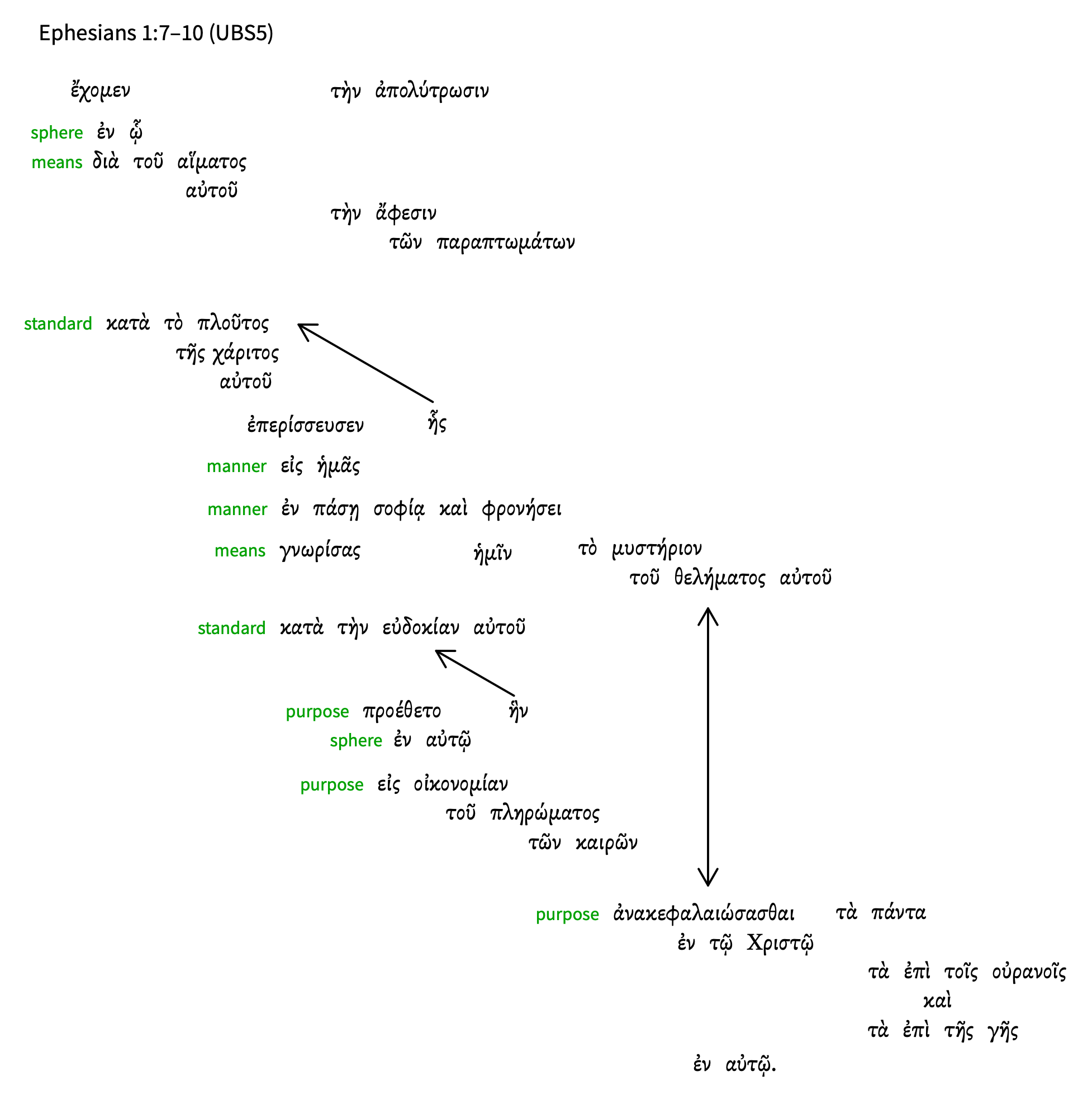
In whom, we have redemption through the blood of him, the forgiveness of transgressions, according to the riches of the grace of him
1:7 ἐν ᾧ ἔχομεν τὴν ἀπολύτρωσιν διὰ τοῦ αἵματος αὐτοῦ, τὴν ἄφεσιν τῶν παραπτωμάτων, κατὰ τὸ πλοῦτος τῆς χάριτος αὐτοῦ
ἐν ᾧ ἔχομεν τὴν ἀπολύτρωσιν διὰ τοῦ αἵματος αὐτοῦ, ἐν prep+DAT “in” sphere, ᾧ RP DMS “whom” object of prep, ἔχομεν PAI 1P ἔχω “we have”, τὴν ἀπολύτρωσιν AFS ἀπολύτρωσις “redemption” DO in apposition to τῶν παραπτωμάτων, διὰ prep+GEN “through” means, τοῦ αἵματος GMS αἵμα “the blood”, αὐτοῦ 3PP GMS “of him”.
τὴν ἄφεσιν τῶν παραπτωμάτων, τὴν ἄφεσιν AFS ἄφεσις “forgiveness”, τῶν παραπτωμάτων GNP “of transgressions” objective.
κατὰ τὸ πλοῦτος τῆς χάριτος αὐτοῦ κατὰ prep+ACC according standard, τὸ πλοῦτος ANP “the riches”, τῆς χάριτος GFS “of the grace”, αὐτοῦ 3PP GMS “of him”.
Which abounded to us, in all wisdom and understanding,
1:8 ἧς ἐπερίσσευσεν εἰς ἡμᾶς, ἐν πάσῃ σοφίᾳ καὶ φρονήσει,
ἧς ἐπερίσσευσεν εἰς ἡμᾶς ἧς GFS “which”, ἐπερίσσευσεν 1AAI 3S περισσεύω “abounded”, εἰς prep+ACC “to” manner, ἡμας 2PP AP “us”.
ἐν πάσῃ σοφίᾳ καὶ φρονήσει ἐν prep+DAT “in” manner, πάσῃ Adj DFS “all” modifying σοφίᾳ, σοφίᾳ DFS wisdom, καὶ coordinating conj “and”, φρονήσει DFS φρόνησις “understanding”.
having made known to us, according to the good pleasure of him which he planned in him
1:9 γνωρίσας ἡμῖν τὸ μυστήριον τοῦ θελήματος αὐτοῦ, κατὰ τὴν εὐδοκίαν αὐτοῦ ἣν προέθετο ἐν αὐτῷ
γνωρίσας ἡμῖν τὸ μυστήριον τοῦ θελήματος αὐτοῦ γνωρίσας 1AAPtc NMS γνωρίζω “having made known” means, ἡμῖν 2PP DP “to us” IO, τὸ μυστήριον ANS “the mystery” DO, τοῦ θελήματος GNS “of the will” gen of content, αὐτοῦ 3PP GMS “of him”,
κατὰ τὴν εὐδοκίαν αὐτοῦ ἣν προέθετο ἐν αὐτῷ κατὰ prep+Acc “according to” purpose, τὴν εὐδοκίαν AFS “the good pleasure”, αὐτοῦ 3PP GMS “of him”, ἣν GFS “which”, προέθετο 1AMI 3S “he planned”, ἐν prep+Dat “in” sphere, αὐτῷ 3PP DMS “in him”.
for the stewardship of the fullness of the times, to sum up all things in the Messiah, the things in the heavens and the things on the land in him.
1:10 εἰς οἰκονομίαν τοῦ πληρώματος τῶν καιρῶν, ἀνακεφαλαιώσασθαι τὰ πάντα ἐν τῷ Χριστῷ, τὰ ἐπὶ τοῖς οὐρανοῖς καὶ τὰ ἐπὶ τῆς γῆς ἐν αὐτῷ.
εἰς οἰκονομίαν τοῦ πληρώματος τῶν καιρῶν, εἰς prep+Acc “for” purpose, οἰκονομίαν AFS οἰκονομία “the stewardship”, τοῦ πληρώματος GMS “of the fullness”, τῶν καιρῶν GMP “times”
ἀνακεφαλαιώσασθαι τὰ πάντα ἐν τῷ Χριστῷ, ἀνακεφαλαιώσασθαι 1AMInf “to sum up” purpose, τὰ πάντα ANP “all things”, ἐν prep+Dat “in” sphere, τῷ Χριστῷ “the Messiah”.
τὰ ἐπὶ τοῖς οὐρανοῖς καὶ τὰ ἐπὶ τῆς γῆς ἐν αὐτῷ. τὰ Article ANP “the things”, ἐπὶ prep+Dat “on” or more fitting for English “in”, τοῖς οὐρανοῖς DMP “the heavens”, καὶ “and”, τὰ Article NNP “the things”, ἐπὶ prep+Gen “on”, τῆς γῆς GFS “the land/earth”, ἐν prep+Dat “in” sphere, αὐτῷ DMS “him”.
—
In whom also we have been made heirs, having been predestined according to the plan of the working of all things according to the council of the will of him,
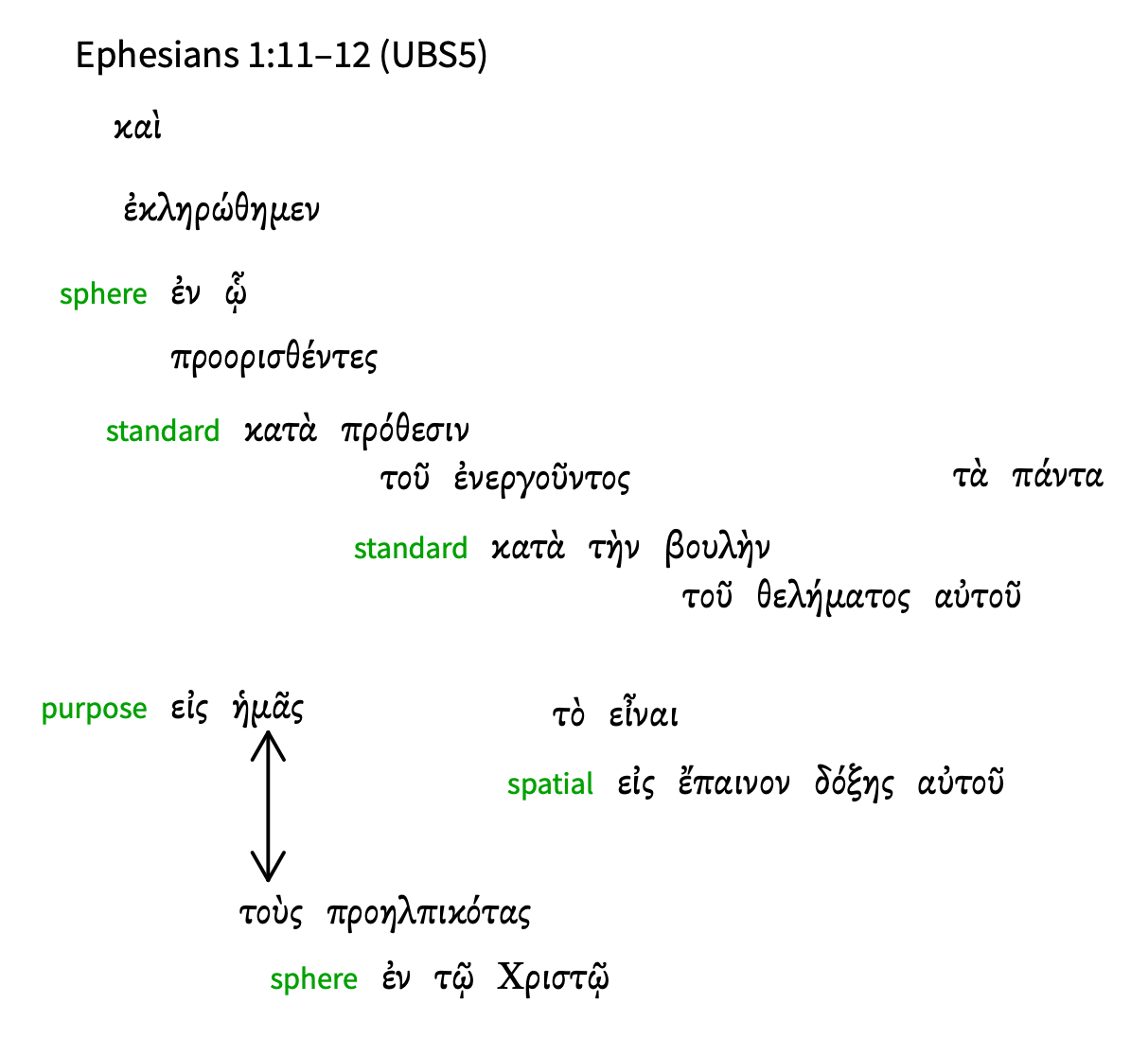
1:11 ἐν ᾧ καὶ ἐκληρώθημεν προορισθέντες κατὰ πρόθεσιν τοῦ τὰ πάντα ἐνεργοῦντος κατὰ τὴν βουλὴν τοῦ θελήματος αὐτοῦ
ἐν ᾧ καὶ ἐκληρώθημεν προορισθέντες ἐν prep+DAT “in” sphere, ᾧ RP DMS “whom” object of prep, καὶ “and”, ἐκληρώθημεν 1API 1P κληρόω “we have been made heirs”, προορισθέντες 1APPtc NMP “having been predestined”,
κατὰ πρόθεσιν τοῦ τὰ πάντα ἐνεργοῦντος κατὰ τὴν βουλὴν τοῦ θελήματος αὐτοῦ κατὰ prep+Acc “according to” standard, πρόθεσιν AFS “the plan”, τοῦ ἐνεργοῦντος PAPtc GMS “the working of” substantival, τὰ Article NNP “things”, πάντα Adj ANP “all”, κατὰ prep+Acc “according to” standard, τὴν βουλὴν AFS “the council”, τοῦ θελήματος GNS “of the will”, αὐτοῦ 3PP GMS “him”.
in order that we might be to the praise of the glory of him having been the first to hope in the Messiah.
1:12 εἰς τὸ εἶναι ἡμᾶς εἰς ἔπαινον δόξης αὐτοῦ τοὺς προηλπικότας ἐν τῷ Χριστῷ.
εἰς τὸ εἶναι ἡμᾶς εἰς prep+Acc “in order that”, τὸ εἶναι PAInf “might be” purpose, ἡμᾶς 2PP AP “we”.
εἰς ἔπαινον δόξης αὐτοῦ εἰς prep+Acc “to” spatial/“for” advantage, ἔπαινον AMS “praise”, δόξης GFS “of the glory” objective, αὐτοῦ 3PP GMS “him”.
τοὺς προηλπικότας ἐν τῷ Χριστῷ. τοὺς προηλπικότας PfAPtc AMP “the ones having first hoped”, ἐν “in” sphere, τῷ Χριστῷ “the Messiah”.
Diagrams
Comments and Conclusions
Christ is the Redemption of Sins (v.7a)
Through our identification in Christ, we are redeemed of our trespasses. It is in Christ we have redemption (ἀπολύτρωσις) for our transgressions. The word translated to redemption is a rare word in Greek meaning payment for a ransom; or, for example, it is used once in the Septuagint where it refers to God bringing his people out of bondage.1 Thielman writes:
“…in Eph. 1:7 Paul’s Greek-speaking readers in Western Asia would have most readily understood the term ἀπολύτρωσις as a metaphorical reference to the price paid to buy the freedom of a captive or slave and would have understood the phrase διὰ τοῦ αἵματος αὐτοῦ as a reference to the purchase price.”2
We who were slaves to sin are now free via the blood of the Messiah (Rom 6:17). It takes the violent and terrible death of the Son of God to reconcile our sins; forgiveness comes at a cost.
God Revealed His Plan out of Kindness (v.7b-9)
The price God has paid has come from the wealthy treasury of God’s grace or kindness. One should imagine grace being hurdled towards them and enveloping them, something like a giant wave.
When it comes to the “wisdom” and “understanding” mentioned in v. 8, commentators are split as to whether we are lavished by God’s grace in all wisdom and understanding or on the other hand wisdom and understanding are characteristics of God. It seems likely that God’s abundance of grace should describe the act of God not the means in which we experience the grace.3
Verse 9 establishes how we encounter this forgiveness. The mystery of God’s will has been made known to us in Christ. Christ, therefore, is the revelation of God’s redemption.4 Further, God is pleased at the accomplishment of his will. As God had predestined his people, he planned to reveal the mystery of his will in Jesus.
God’s Plan to Sum Up All Things in Christ (v.10)
God is the one to steward his plan in Jesus—a plan to unite all things on heaven and on earth from all time.
Time
God has a plan through “salvation history.” God brought his people out of Egypt, God put his people into exile, God brought his people back, God revealed the Messiah. God’s plan extends to the coming of the New Heaven and the New Earth. God is in control of “all times,” and “all times” are working towards his good pleasure.
Things in the Heavens and on the Land
Paul uses the term “to sum up” (ἀνακεφλαιώσασθαι) to describe the action of God in Christ. The word itself is a compound of ἀνα- meaning repetiton and κεφάλαιον meaning main point; together, the words mean “to sum up”, or perhaps “to bring to a head.” In Paul’s use we can surmise all things are being brought into one sum in Christ. As Thielman writes, “…he is metaphorically describing God’s plan to sum up his disparate creation in Christ… God will use Christ to bring to gather the disparate elements of creation whether they are “things in the heavens” or things on the earth.”5 Christ is the one who brings the disorder of sin in the world into order.
“19 For the creation eagerly waits with anticipation for God’s sons to be revealed. 20 For the creation was subjected to futility—not willingly, but because of him who subjected it—in the hope 21 that the creation itself will also be set free from the bondage to decay into the glorious freedom of God’s children” (Romans 8:19-21, CSB).
Heirs by God’s Plan (v.11)
In accordance with God’s plan we have been made heirs to God’s kingdom. This will tie neatly with v. 14 in which the Holy Spirit is given as a down payment for the inheritance of the kingdom. We have already seen how we are adopted by God and how we have been chosen by God. God’s will does not stop with his choosing us, but he has a purpose for us—to exist with him.
God’s actions were not loose, but meticulous. It was God’s “purpose,” “work,” “counsel,” and “will.”
We Exist to Praise God (v.12)
Like in v. 6 all that God does in us is so that we may exist as living worship to God. We reveal God’s plan through our hope in Christ’s sure fulfillment. As Christians, we not only have reliable texts, but we have a reliable God who has accomplished victory over the grave—something evident in the lives we live. We are the ones who hope for the dwelling of God with his people, today in part through the Holy Spirit but soon to be in whole.
- Thielman, BECNT, 57. There is debate whether in Ephesians Paul speaks of Jesus blood as a payment or simply as Jesus blood being the means of the deliverance. ↩
- Thielman, BECNT, 58. Thielman also argues the underlying meaning of being brought out of Egypt should not be forgotten when performing exegesis. ↩
- Thielman, BECNT, 62. This line of argument fits God’s meticulous planning to chose his people and predetermining their adoption as seen in v.5. ↩
- See Linebaugh’s argument in The Word of the Cross: Reading Paul. ↩
- Thielman, BECNT, 67. ↩

 Nic Horn
Leave a comment